Demolition curtains: safe, smart and strategic demolition in urban environments

Urban demolition is never “just another job”. You’re working next to traffic, homes, shops, offices—and often right up against neighbouring buildings. That means strict expectations around safety, nuisance control and environmental impact, plus zero patience for surprises.

One wrong choice in screening can quickly escalate: dust complaints from residents, damage to nearby property, a stop-work order, or (worst case) injury and legal claims. And because inner-city sites leave little room to improvise, the measures you choose at the start often determine whether the schedule holds—or slips.

What this guide covers

Contact us today
Temporary dust partition with zipper door for safe access inside a city-centre building

Demolition curtains are not standard construction sheeting.They are technical screening systems designed to control risks, minimise nuisance and help you meet the duty of care that comes with demolition in apublic environment.

In this guide you’ll learn:

dot

What demolition curtains are and when you need them

dot

How they contribute to safety, environment and scheduling

dot

Which legislation and liability rules apply

dot

Practical tips for logistics and organisation

Whether you’re a project manager, site supervisor, consultant or client: this page gives you insight into the strategic added value of demolition curtains

Contact us today

What are demolition curtains?

Talk to a specialist
Temporary dust control barrier inside an inner-city building during renovation

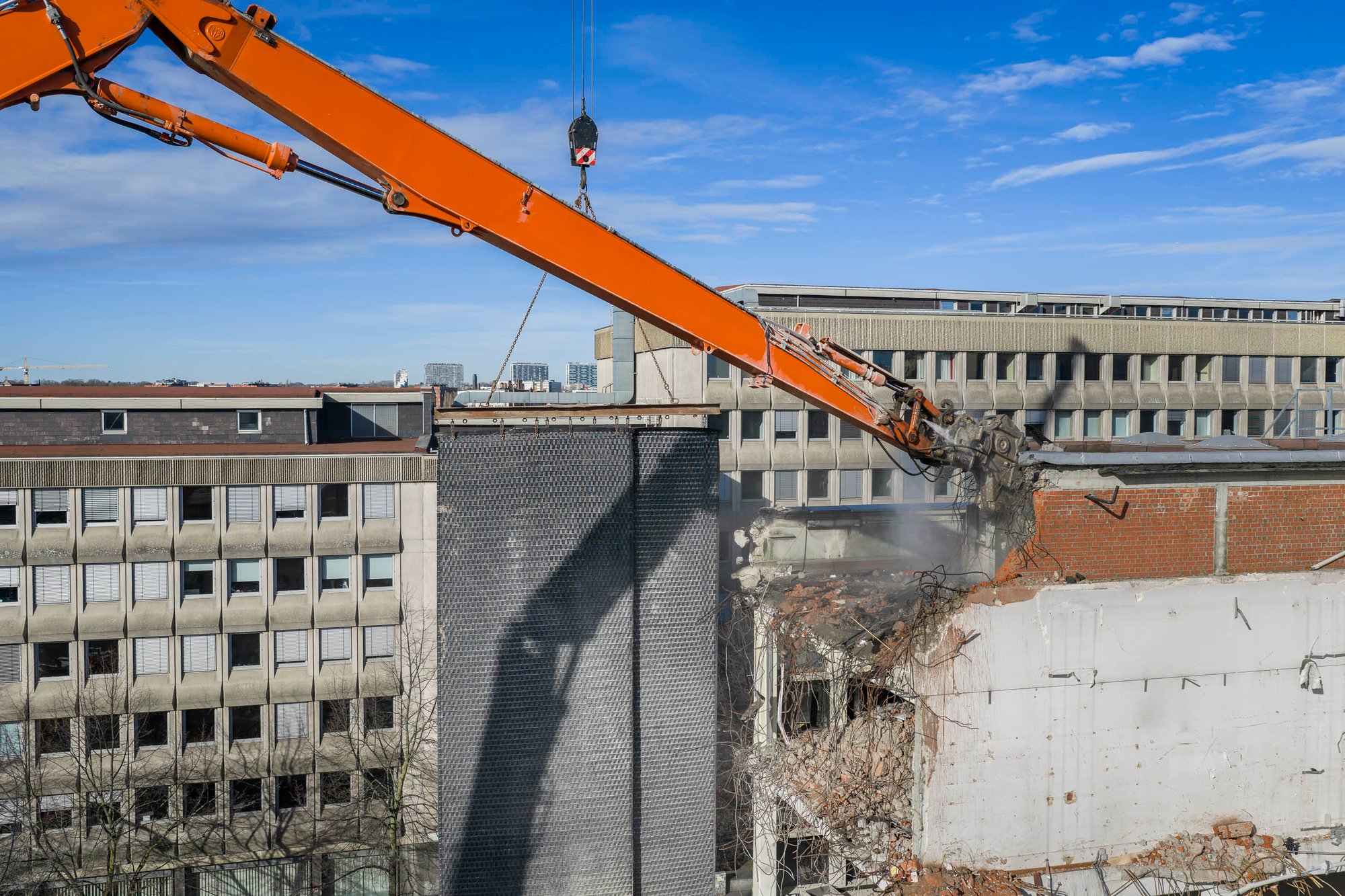
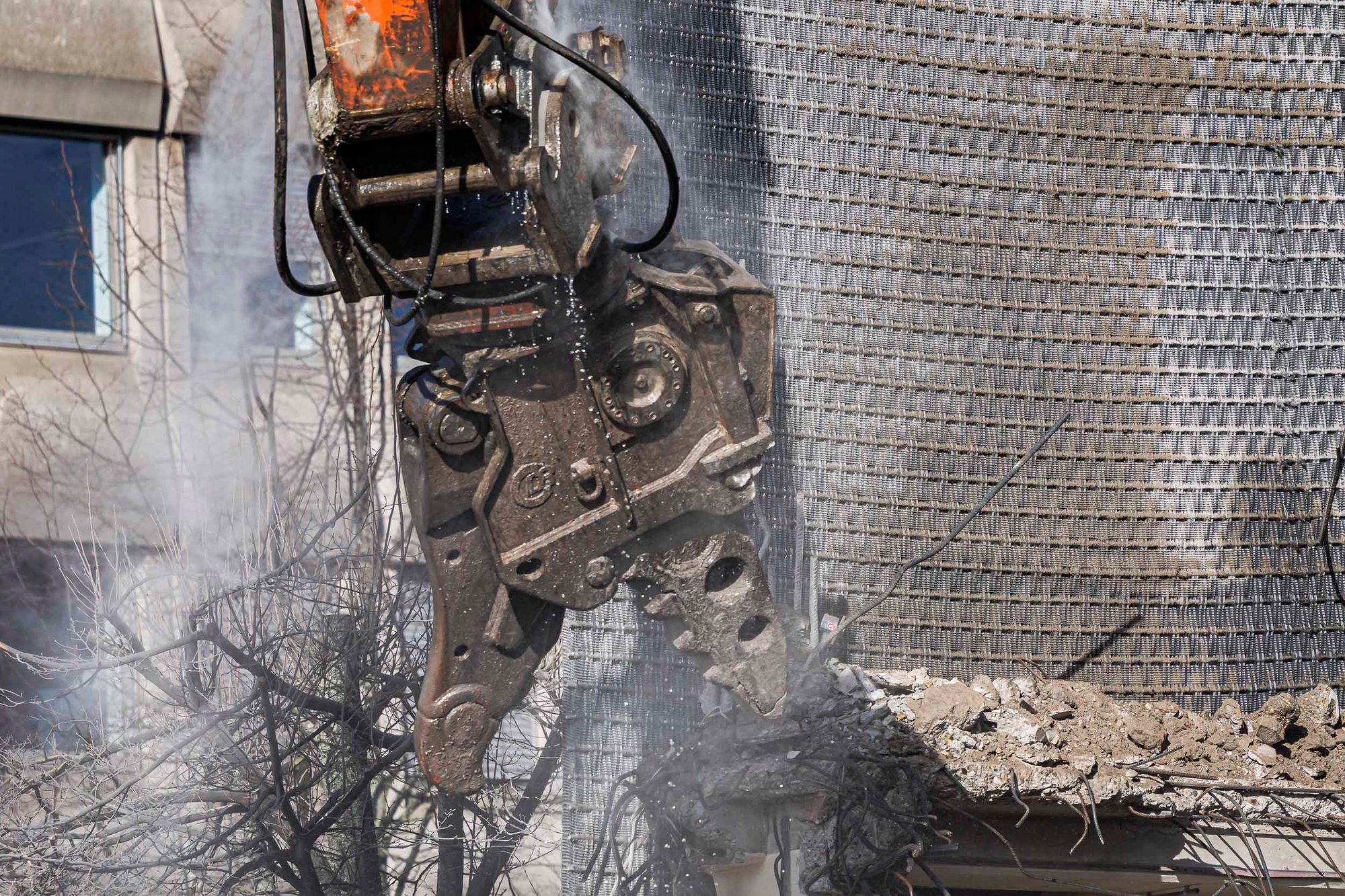
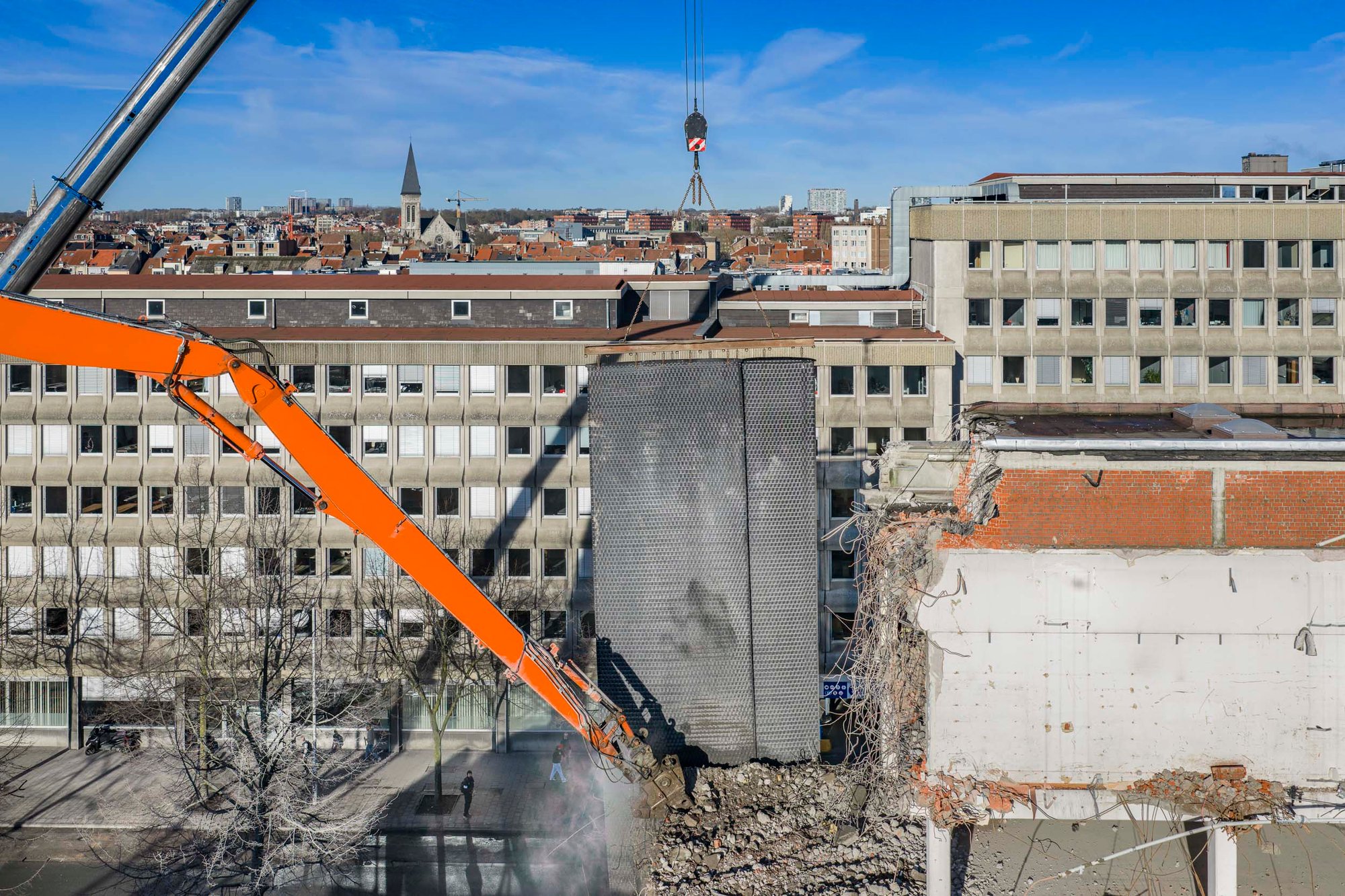
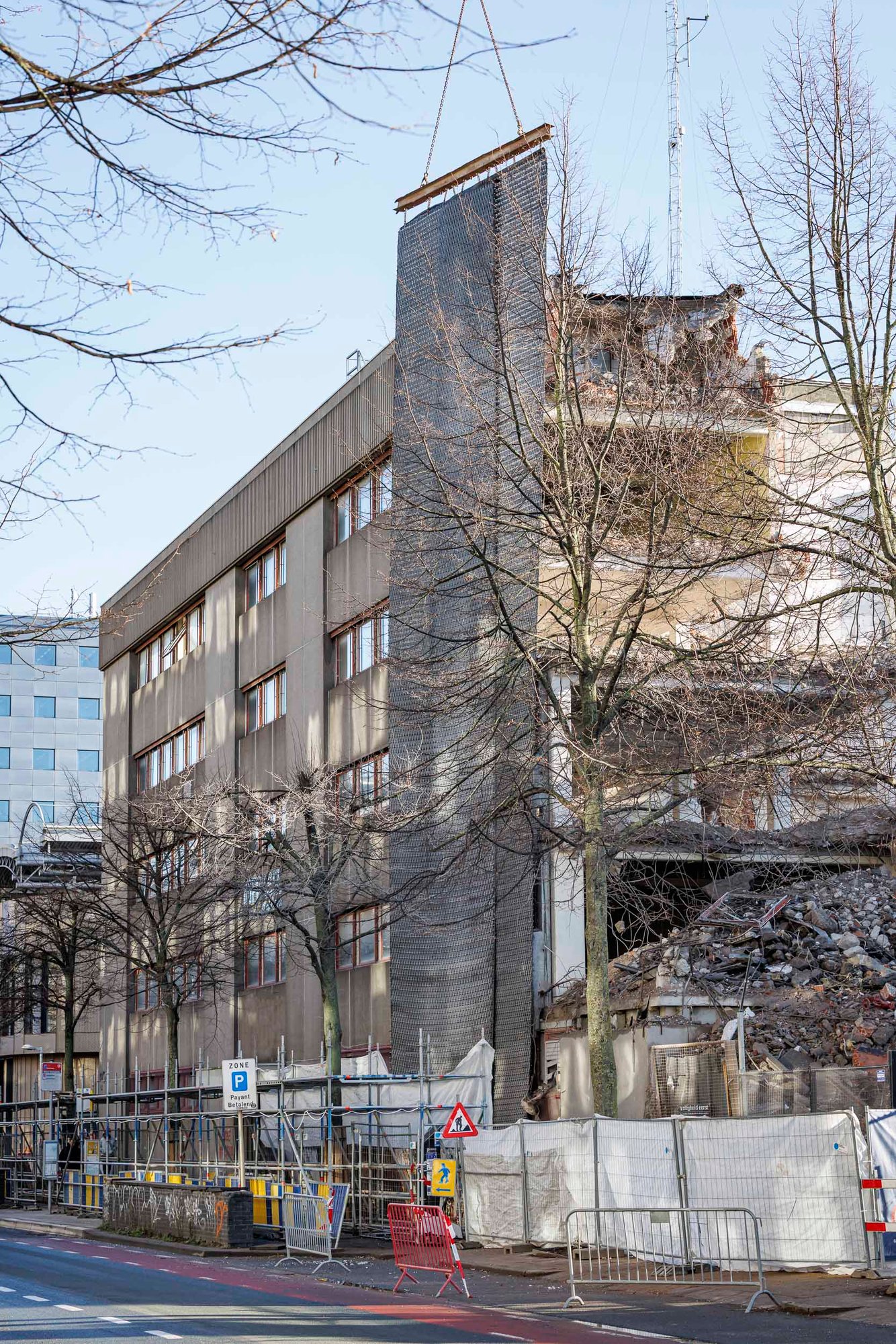
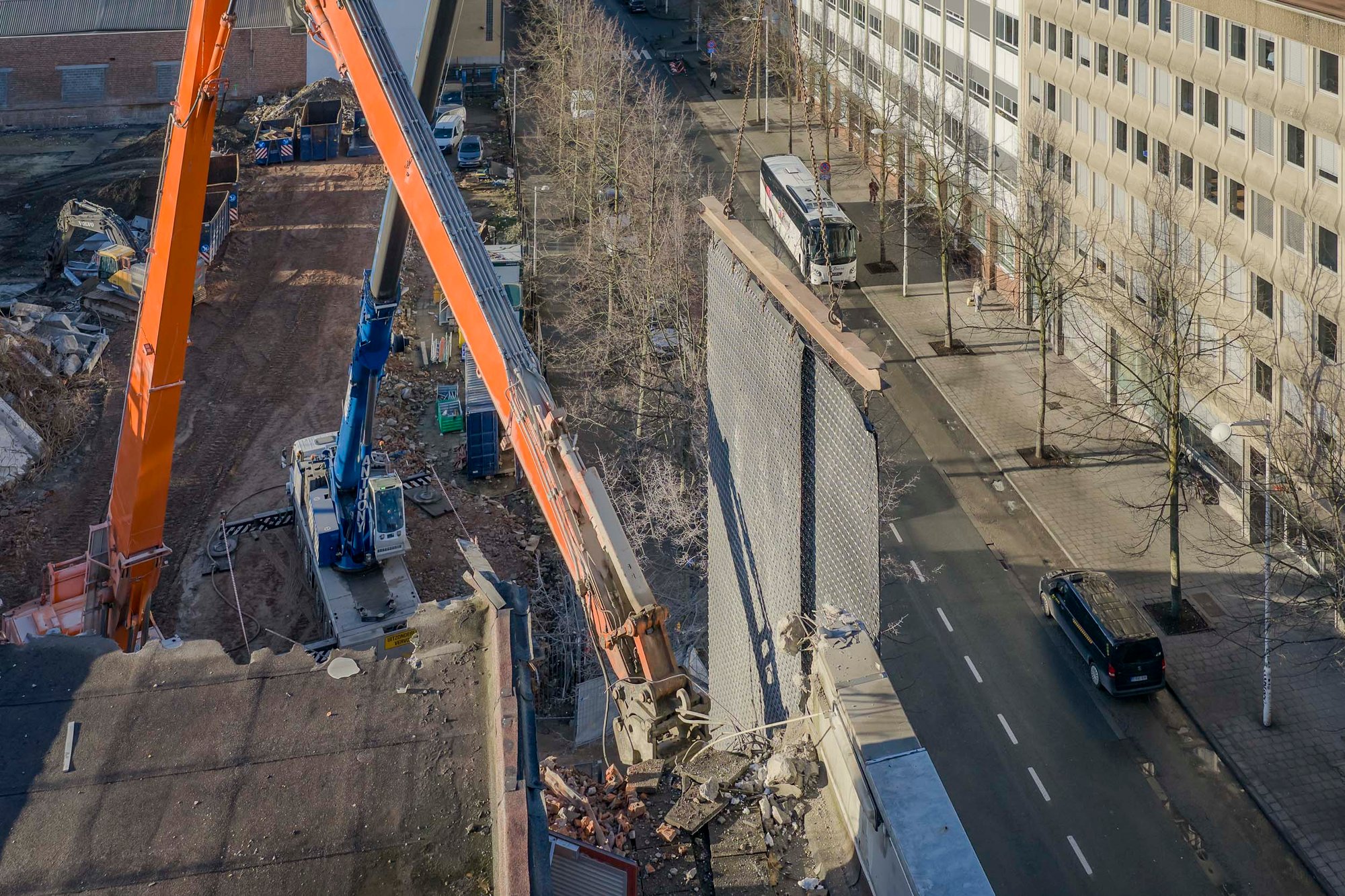
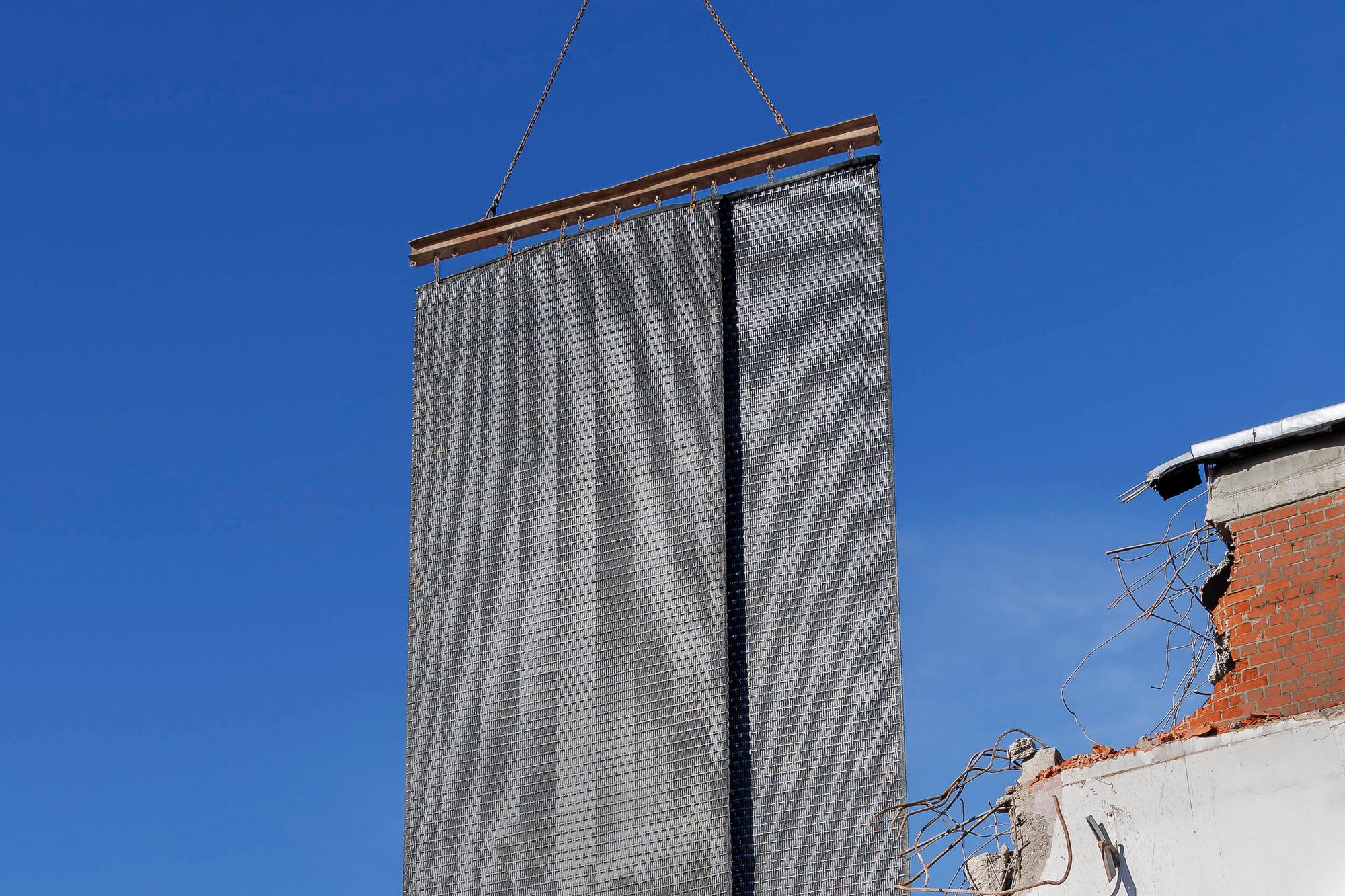
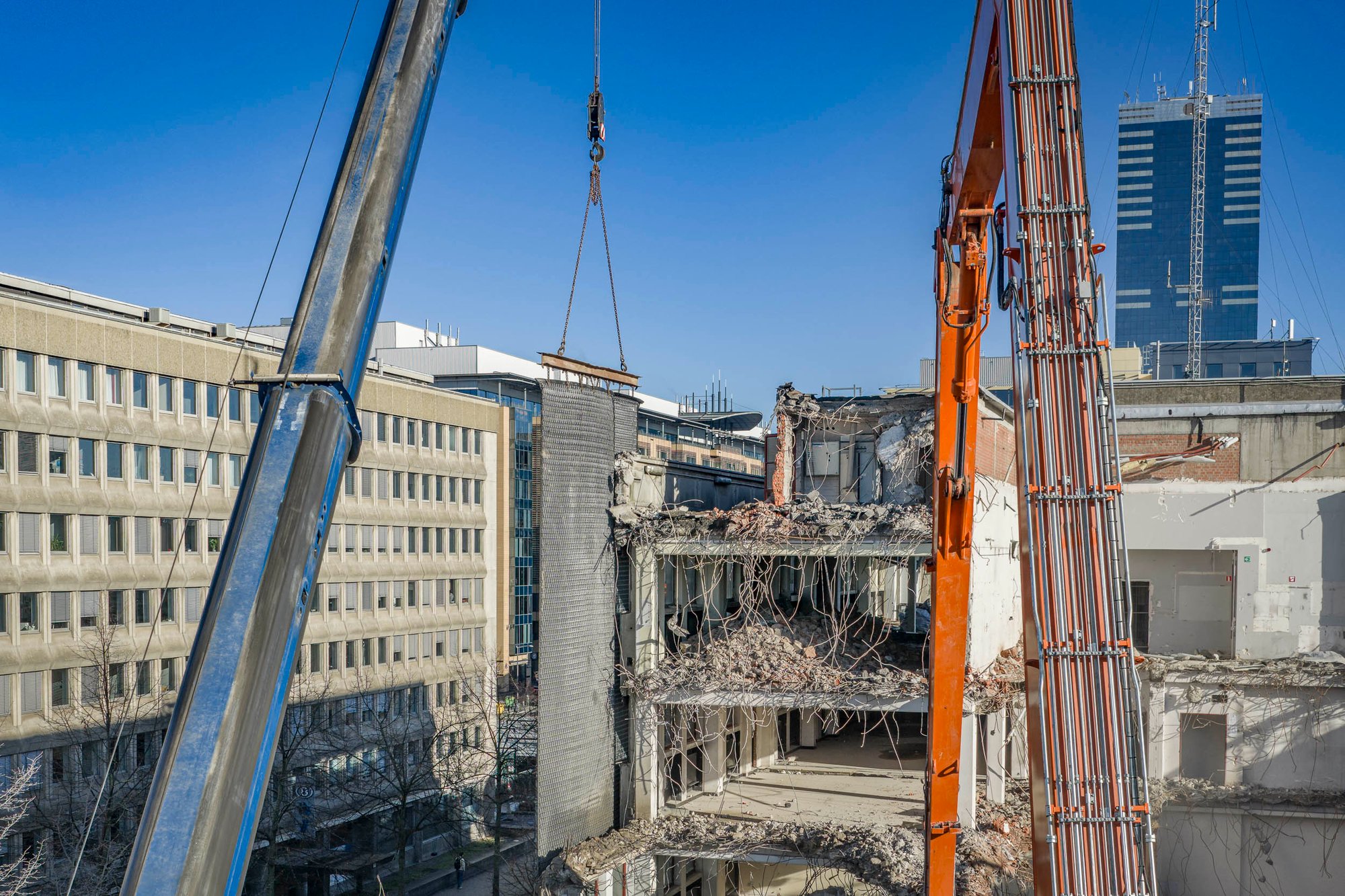
Demolitioncurtains are robust, technical screening systems used during demolition worksto capture dust, debris and falling material. They create a physical barrier between the demolition zone and the immediate surroundings—such as streets,homes, shops or offices.

Unlike standard construction sheeting or nets, demolitioncurtains are designed for:

dot

Heavy loads: falling debris, fragments, high wind pressure

dot

Active demolition zones: a continuously moving demolition front

dot

Urban context: narrow streets, limited space, sensitive surroundings

Especially in inner-city and high-density urban demolition, demolition curtains are not just a safety measure, but often also a requirement to be allowed to start at all.

Talk to a specialist

More than a sheet on scaffolding

View our projects
Dust curtain installed to protect adjacent areas during city-centre building refurbishment

From a distance, demolition curtains can look like “a sheeton scaffolding”. On site, they behave very differently—because demolition ismessy, dynamic and exposed to forces that lightweight measures simply aren’tbuilt for.

Demolition curtains help manage:

dot

Fine dust: not just visible “grey air”, but fine particles that travel and trigger complaints fast—especially in dense streets and courtyards.

dot

Falling parts and fragments: demolition creates unpredictable break points. Pieces can drop, bounce or fly outward when elements fail or get lifted away.

dot

Wind load: in cities, wind accelerates between buildings and around corners. That can turn basic sheeting into a risk. Curtains are chosen and installed with wind pressure and stability in mind.

dot

A moving demolition front: the work zone shifts as you progress. Curtains are a practical way to keep the boundary controlled while the job evolves.

So no—this isn’t about making the site look tidy. It’s about controlling the demolition zone in an environment where the public and adjacent buildings are often only metres away.

View our projects

The difference between demolition curtains and construction sheeting

They may look similar in photos. In practice, they servedifferent goals and perform under different loads.

Construction sheeting / nets
A straightforward option for visual screening and basic nuisance reduction. Best for light work, quick setups, and short-term use where wind loads and impact protection aren’t the main concern.

Demolition curtains
Built for tougher conditions and more demanding phases. Ideal when you need a robust, modular system that handles higher loads and wind pressure—and can be reused across phases and future projects.

If your project is near public space or third parties, the difference becomes simple: construction sheeting is mainly presentation and light containment; demolition curtains are a technical control measure.


Contact us today

When are demolition curtains needed — and when not?

Talk to a specialist
Temporary dust barrier installed in a narrow corridor of an inner-city building

Most projects don’t fail on demolition technique. They failon context: too little space, too much public exposure, too much wind, too muchdust, too many stakeholders.

Demolition curtains are typically needed (or strongly recommended) when:

dot

The site is inner-city or directly adjacent to pedestrians/traffic.

dot

Demolition happens at height or in wind-exposed locations.

dot

There is a realistic risk of falling debris, fragments or rubble reaching beyond the site boundary.

dot

Dust control is critical due to surroundings (homes, shops, schools, offices).

dot

The demolition method is more “open” (e.g. high-reach, mechanical demolition) and the work zone changes constantly.

Not sure? Have the situation assessed based on height, distance, demolition method and wind sensitivity. That quick check usually clarifies whether curtains are mandatory in practice, strongly recommended, or optional.

Talk to a specialist

Want to know whether demolition curtains are mandatory—or simply the smart choice in your situation? Discuss your project with our advisors—no obligation

SAFETY ON SITE

Safety is not a nice-to-have—it’s a precondition fordemolition. And in urban environments, traffic, pedestrians and vulnerablebuildings are often right next to the worksite.

Investigations into demolition incidents repeatedly point tothe same weak spots: insufficient screening, incomplete risk analysis andunderestimating third‑party exposure. Deploying demolition curtains early is apractical preventive measure—because it reduces the chance that an incident leaves the demolition zone.

Show project

What demolition curtains contribute to safety

Contact us today
Dust curtain with zipper door at the entrance of a city-centre building

Demolition curtains can contribute to safer operations by helping you:

dot

Screen against falling debris and fragments.

dot

Limit the spread of dust and small particles.

dot

Dampen noise during breaking and sawing work.

dot

Reduce unauthorised access by creating a clear physical boundary around the demolition area.

They don’t replace good demolition planning, supervision and procedures. But they do add a real safety layer where it matters most: the interface between demolition work and the outside world.

Contact us today

Legislation: Working Conditions ACt and Bbl safety in demolition works

Talk to a specialist
Zipper-door dust curtain used to control dust during city-centre renovation works

In the Netherlands, demolition work sits under a clear dutyof care: you must prevent or minimise risks to workers and third parties as faras reasonably possible. That duty of care is reflected in the Working Conditions Act (Arbowet) and in the Bbl requirementsaround safe construction and demolition works.

In practice, that means you should be able to show:

dot

A solid Health & Safety Plan (V&G plan) for the project.

dot

A proper RI&E risk assessment, including risks to third parties.

dot

Preventive measures that match the site context (height, proximity, wind, demolition method).

dot

Inspection/installation documentation and site controls where relevant.

Enforcement can involve the Dutch Labour Inspectorate and other authorities, and consequences can range from corrective measures to shutdowns and fines — especially if third party risk is clearly present and insufficiently controlled.

Talk to a specialist

Legislation: Working Conditions Act and Bbl safety in demolition works

Contact us today
Installing a dust curtain in a city-centre building with limited access space

In the Netherlands, demolition work sits under a clear duty of care: you must prevent or minimise risks to workers and third parties as far as reasonably possible. That duty of care is reflected in the Working Conditions Act (Arbowet) and in the Bbl requirements around safe construction and demolition works.

In practice, that means you should be able to show:

dot

A solid Health & Safety Plan (V&G plan) for the project.

dot

A proper RI&E risk assessment, including risks to third parties.

dot

Preventive measures that match the site context (height, proximity, wind, demolition method).

dot

Inspection/installation documentation and site controls where relevant.

Enforcement can involve the Dutch Labour Inspectorate (Inspectie SZW) and other authorities, and consequences can range from corrective measures to shutdowns and fines—especially if third party risk is clearly present and insufficiently controlled.

Contact us today

Environment & sustainability

Circular demolition isn’t just about “sorting waste”. It’s about protecting value—materials, reusable components and the environment around the site. Demolition curtains support that by limiting fine dust, improving site separation and helping you work in a more controlled way, which often reduces unnecessary transport movements.

Fine dust control and public health

Contact us today
Overlapping dust curtain panels for better sealing in an inner-city building

Fine dust is one of the quickest ways to lose trust in an urban project. People don’t need a measurement report to complain—they just need dust on a windowsill or a car.

Demolition curtains help by containing dust closer to the source and reducing how easily it spreads into the public space. Combined with additional measures (like misting/spraying where appropriate), they contribute to: 

dot

A healthier working environment on site.

dot

Fewer nuisance peaks in the surrounding area.

dot

Better predictability in day-to-day operations.

Contact us today

Protecting reusable elements

Talk to a specialist
Dust barrier along a corridor in a city-centre building to limit dust spread

If you’re aiming for circular demolition, damage prevention matters. Curtains create a controlled boundary that makes it easier to:

dot

Work in separated zones.

dot

Remove reusable components with less risk of impact damage.

dot

Keep valuable elements protected from dust, debris and uncontrolled movement.

The result: higher quality salvage and less “it was reusable until it wasn’t”.

Talk to a specialist

Less transport, lower CO₂ emissions

More abou circular demoltion
Dust barrier spanning a full doorway width inside a city-centre building

Control at the source often means fewer unnecessary movements. When dust and debris are captured and managed more directly, you can reduce:

dot

Intermediate storage and re-handling.

dot

Transport runs for unplanned clean-ups.

dot

Disruption in the street that triggers additional logistics.

That aligns with the broader push toward cleaner, lower emission construction and demolition practices—especially in cities aiming for emission-free construction sites by 2030.

More abou circular demoltion

Technological deployment

Modern demolition curtains are more than steel-backed sheets on scaffolding. They fit into a “Smart Demolition” mindset: data-driven, planned, and designed to make demolition safer, more efficient and more predictable.

Technical features of modern demolition curtains

Contact us today
Close-up of dust curtain overlap for improved sealing on an inner-city building site

Common features that make demolition curtains practical in real projects:

dot

Modular: adaptable to different buildings, heights and phases.

dot

Integration options: with lifting provisions and/or scaffolding structures.

dot

Optional wind load monitoring: supporting operational decisions in exposed sites.

dot

Reusable: easy to rotate between projects after inspection and maintenance.

The key advantage isn’t “more tech”. It’s more control, especially when the demolition front moves quickly.

Contact us today

Digital planning and material passports

Curtains become more effective when they’re planned like a real system, not an afterthought. With digital project models and structured planning, you can:

• Define the screening line based on height, reach, and third party exposure.

• Optimise crane positioning and logistics in tight streets.

• Connect demolition sequencing with circular goals (selective removal and reuse).

• Register reusable elements via material passports, improving traceability and reuse outcomes.

That’s where demolition curtains move from “hardware” to “strategy”.

Nuisance control in construction

In urban environments, nuisance isn’t just annoying—it’s a legal and operational risk. Complaints can trigger inspections, restrictions, or simply force you into reactive measures that cost time and money.

Demolition curtains help control dust, noise and visual disturbance, making the impact on residents and businesses smaller—and the project more stable.

Contact us today

Dust control

Show project
Dust curtain installed in a city-centre building entrance to contain demolition dust

Dust is the number-one issue people notice, and it escalates quickly in high-density areas. Curtains help contain dust and debris in the demolition zone, reducing:

dot

Visible dust spread.

dot

Residue on nearby property.

dot

Complaints and enforcement risk.

They work best when combined with a clear plan for dust suppression and housekeeping.

Show project

Noise reduction

Breaking and sawing work can be loud, and in streets with hard façades the noise can bounce and carry. Curtains can help dampen certain noise effects and reduce direct exposure—especially when screening line-of-sight between the operation and the surroundings matters.

They won’t make demolition silent (sadly). But they can make it more manageable—and more acceptable.

visual screening

Visual impact drives perception. A well-screened site:

• Improves privacy for adjacent buildings.

• Reduces “what’s happening here?” stress for residents and businesses.

• Signals professionalism and care—something authorities and clients do notice.

Want to minimise nuisance and maintain local support? Download our e-book:

Logistics & organisation

“Whoever controls logistics, controls the whole project.” In inner-city demolition, space is limited, access windows are tight, and every transport movement needs planning.

Demolition curtains support logistics because they help you define the demolition zone clearly, manage debris flows and keep the surrounding street as functional as possible.

Show project

Direct capture and separated removal

A controlled boundary makes it easier to work cleanly and selectively:

• Less intermediate storage (or smaller buffers).

• Faster removal and fewer re-handling steps.

• Better separation of streams.

• Often higher residual value from cleaner material flows.

This is one of those measures that saves time precisely because it prevents chaos.

Limited space, maximum control

Contact us today
Temporary dust barrier with zipper door inside an inner-city building during renovation

In narrow streets, you typically have:

dot

Limited crane positioning options.

dot

Limited laydown area.

dot

Strict timing for deliveries and removal.

dot

Sensitive neighbours and public routes.

Curtains help by creating a flexible screening line that you can adapt as the project progresses—without needing to rebuild your entire site setup every week.

Contact us today

Legislation & liability

Picture this: a piece of debris hits a car—or worse, a passer-by. The consequences are immediate and severe: injury, damage, investigations, legal liability and reputational impact.

Incidents in construction and demolition repeatedly show that inadequate screening and insufficient preventive measures can lead to disputes and claims—especially in inner-city work where third parties are inevitably close. That’s why legal risk coverage matters, not just via insurance, but through preparation, execution and documentation of preventive measures.

Duty of care, enforcement and project requirements

Contact us today
LOW-Res-No-Logo-303

Even when rules differ by country, the pattern is consistent: if third‑party risk is clear and your controls are weak, consequences can escalate quickly—stop-work actions, penalties, contractual issues, or loss of client trust.

That’s why it pays to treat demolition curtains as part of your baseline control strategy when the site context demands it:

dot

Public space directly adjacent to the demolition zone.

dot

Demolition at height.

dot

High wind exposure.

dot

High dust and debris generation.

If the risk is obvious (busy street, adjacent buildings, demolition at height) and measures are weak, enforcement can escalate quickly—up to stop-work actions and fines.

Contact us today

Liability and insurance

Insurance doesn’t replace prevention—it rewards it. In third party damage cases, insurers commonly look for evidence that you:

• Assessed risks properly.

• Made clear choices in your safety approach.

• Installed and maintained preventive measures correctly.

• Documented the situation and controls.

Demolition curtains support that evidence trail—especially when paired with installation records, inspection routines and photo documentation.

Prevention as a legal strategy

More about safety and legislation
Temporary dust barrier installed inside a city-centre building near the central station, corridor view

The most effective “legal strategy” in demolition is boring in the best way: 

dot

Deploy screening early, not after the first complaint.

dot

Perform inspections and record key moments.

dot

Document the measures in photos and logs.

dot

Communicate clearly with the surrounding area (what, when, how you control nuisance).

It reduces incidents, strengthens your position if something happens, and helps keep the project moving.

More about safety and legislation

Frequently asked questions about demolition curtains

What are demolition curtains?
Demolition curtains are robust screening systems used during demolition to help contain dust, debris and falling material, creating a controlled barrier between the site and the surroundings.

Are demolition curtains mandatory?

Not always explicitly. In many projects there is a general duty of care and project requirements to reduce third‑party risk. Where exposure is high, demolition curtains are often expected.

What’s the difference between demolition curtains and construction sheeting?
Construction sheeting is typically for visual screening and light containment. Demolition curtains are built for active demolition zones, higher loads and higher wind pressure.

When do I need demolition curtains—and when not?
They’re most useful in urban sites, demolition at height, and near traffic/homes/businesses. With large buffer zones and minimal third‑party exposure, lighter measures may be sufficient.

Do demolition curtains reduce dust complaints?
Yes. They help contain dust closer to the source and reduce spread into public space. For best results, combine with site housekeeping and dust suppression measures where needed.

Do demolition curtains help with falling debris and fragments?
Yes. They add a physical boundary that helps reduce the chance that fragments and rubble leave the demolition zone, especially in tight inner-city conditions.

Do demolition curtains work in strong winds?
Demolition curtains are engineered for wind loads and installed accordingly. In severe weather, temporary shutdowns may still be required for safe working at height.

Can demolition curtains be reused?
Yes. Modern systems are modular and reusable. After inspection and maintenance, they can be deployed across multiple projects and phases.

Talk to a specialst

Using demolition curtains? Start with a solid assessment

Every demolition project is different. The best solution depends on location, height, surroundings, demolition method and schedule. Want to know which approach fits your project?

Discuss your project

PROTECT WHAT MATTERS. DISCOVER WHAT ROBUSTA CAN DO FOR YOU.